
Introduction
Trust is the foundation of every procurement process. Many organizations still face contract disputes and duplicate data. Also, delayed payments continue to disrupt the process. Even with digital tools, processes highly rely on manual checks and monitoring.
But the introduction of blockchain has addressed this serious concern by bringing transparency, security, and trust to the process.
When integrated with procure to pay software solutions, blockchain implements a system where transactions are secure and transparent. It removes the need for repeated verification. As a result, a company can experience trust directly in the process.
In this guide, we explore how blockchain is transforming P2P operations and why it is becoming critical for procurement strategies heading into 2026.
Why Trust Breaks in Traditional P2P Systems
Most procurement systems are not originally designed to provide real-time transparency. As a result, organisations often struggle with
Inconsistencies between contract versions
Data mismatches across procurement and financial systems
Delays in invoice validation and approvals
Reliance on third parties for verification
Data flows across multiple systems that are not always interconnected.
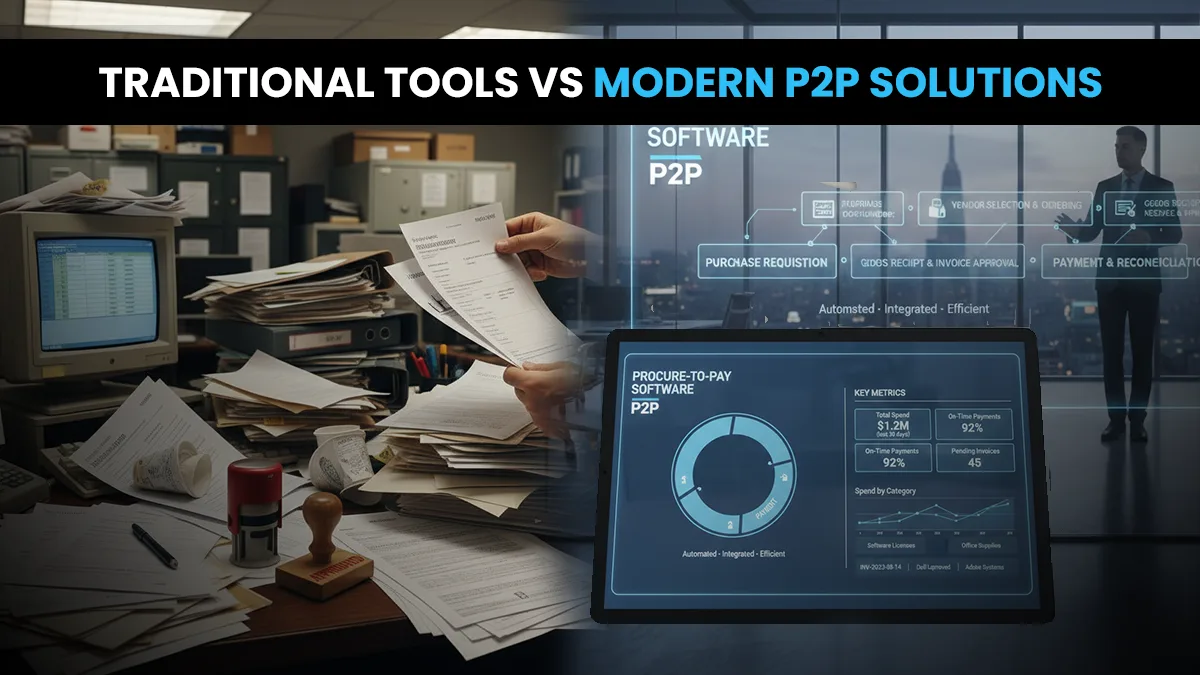
Hence, even advanced P2P procurement software can not fully eliminate these challenges. It sometimes results in slow processes, high risks, and reduced trust between stakeholders.
These challenges suggest the need for a system where trust is integral. This is where blockchain comes into role.
Know Blockchain in Procurement
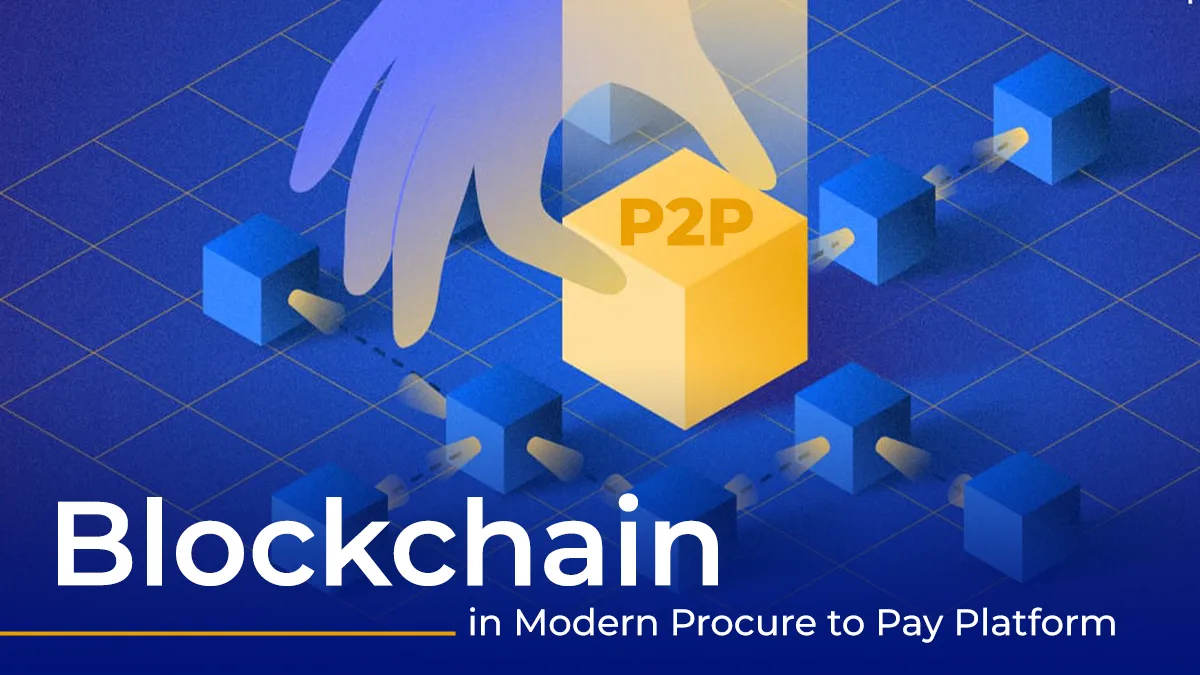
Blockchain is a distributed digital ledger that records transactions in a secure and tamper-proof way.
Once the information gets recorded in it, it can not be altered or deleted by any means.
In the procurement process, it means the following:
Contracts are recorded permanently
Transaction histories are traceable
All the stakeholders access a single and consistent version of data
When combined with procure to pay software solutions, blockchain ensures everything is recorded with complete integrity.
Now that we understand what blockchain is, let’s compare how it transforms traditional P2P processes.
Traditional P2P vs Blockachain-Enabled P2P
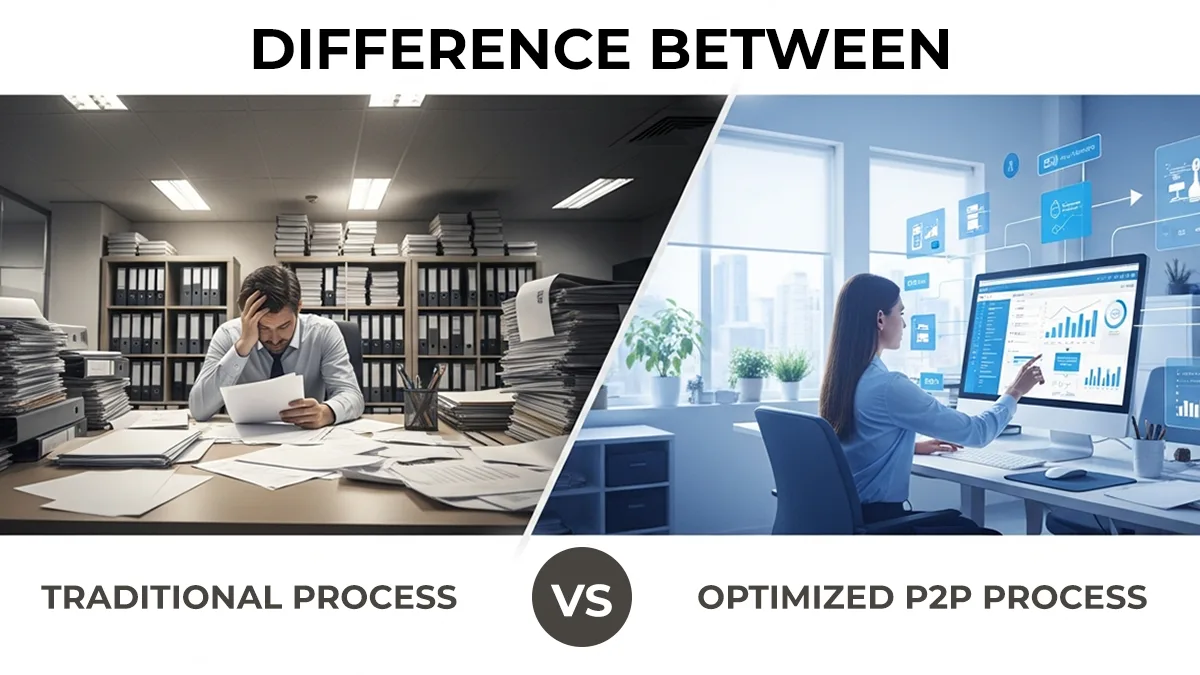
The difference between traditional and blockchain-enabled P2P systems becomes clear when you look at how each handles trust, data, and execution.
Let’s break down each area in detail.
Area | Traditional P2P | Blockchain-Enabled P2P |
|---|---|---|
Contract Management | Editable and version-based | Immutable smart contracts |
Data Trust | Depends on systems | Built-in trust |
Verification | Manual checks | Automated validation |
Transparency | Limited | Shared and transparent |
Dispute Resolution | Time-consuming | Faster and data-backed |
Blockchain removes the need for repeated verification. Also, it ensures data reliability from the start.
This transformation becomes even more powerful when we look at the concept of immutable or smart contracts.
Understanding Immutable Contracts (Smart Contracts)
Smart contracts are the core of blockchain in procurement. Smart contracts are self-executing agreements stored on a blockchain.
It is commonly known as immutable contracts.
These contracts automatically apply terms once predefined conditions are met.
Key characteristics include:
Fixed Data
Automated Execution
Visibility to all parties
It reduces manual intervention. Also, it ensures the agreements are executed exactly as defined in the system.
Now, let’s explore how blockchain improves P2P workflows for businesses.
How Blockchain Improves P2P Processes
Tamper-Proof Contract Management
Contract mismatch is a common reason for disputes between parties. Once a contract is recorded in a blockchain, it can not be altered. It ensures everyone works with the same version of the data.
This is how blockchain procurement enables enforceable agreements. It eliminates version conflicts.
Automated Payments with Smart Contracts
Smart contracts execute payments automatically based on predefined triggers. It removed dependency on manual approvals. Hence, it drives faster payments and improved supplier trust.
Real-Time Transparency Across Stakeholders
All stakeholders, including procurement, finance, and suppliers, have access to the same data in real time. A blockchain-based P2P procurement system eliminates disconnected systems.
With these changes, businesses can experience improved collaboration and reduced miscommunication.
Reduced Frauds and Errors
Blockchain records are immutable. It does not allow any unauthorized change to the system. It minimizes risks such as the following:
Data inconsistencies
Invoice manipulation
Duplicate payments
It ensures stronger security and data accuracy.
Data inconsistencies
It results in higher data integrity within the business. It also helps the company to reduce financial risks.
This reduces risks such as:
invoice manipulation
duplicate payments
fraudulent transactions
It ensures stronger security and data accuracy.
Faster Dispute Resolution
Disputes in business often arise due to a lack of clarity and incomplete records. Here, blockchain provides a complete and verifiable transaction history to a business.
A business can resolve disputes faster, and that too with a data-driven solution.
Compliance and Audit
Audits and compliance demands for accurate and traceable records. Blockchain creates a permanent and time-stamped record of all transactions. Hence, it simplifies compliance and audit readiness of a business.
Real-Life Scenarios Where Blockchain in P2P Works.
Growing Supply Chains
Organizations working with international vendors often deal with trust and verification challenges. Blockchain makes sure that all parties operate with a shared and verified set of data.
Manufacturing Businesses
Manufacturers deal with high-value contracts and complex supplier networks.
Blockchain-enabled procure to pay software solutions ensure secure and efficient transaction management among stakeholders.
Regulated Industries
Industries such as healthcare and finance require strict compliance. Blockchain in these industries can offer transparent and immutable records of data.
Implement Blockchain in P2P Systems for Businesses
1. Identify Use Cases
A business looking for blockchain-based P2P should start by focusing on important areas such as contract management, payments, and compliance.
2. Choose the Right Platform
Now, it is time to choose a procure to pay platform that supports blockchain integration.
3. Start with Smart Contracts
Automate simple workflows before scaling further.
4. Integrate with Existing Systems
Ensure seamless data exchange between blockchain and ERP or financial systems.
5. Train Teams and Suppliers
Train internal teams and vendors to ensure smooth adoption of blockchain-based P2P.
Changes to Consider
Blockchain offers visible benefits to an organization. But it should consider a few factors before adopting it.
The initial investment and setup costs can be high, especially when upgrading existing systems.
Integrating blockchain with legacy procurement systems may require time and careful planning.
Companies do need to hire skilled resources to manage and maintain the technology.
In addition, suppliers must be ready and willing to adopt blockchain-based processes for it to work effectively. That said, as the technology matures and adoption grows, these challenges are expected to reduce over time.
Looking ahead, blockchain will play a bigger role in transforming procurement into a more reliable and efficient function.
The Future of Blockchain in P2P (2026 and Beyond)
By the end of the year 2026, blockchain is estimated to become an integral part of modern procurement systems in many businesses. It will move from being an optional innovation to a standard feature in many procure to pay solutions.
Some key trends in blockchain include the following:
The wider use of smart contracts to automate agreements and approvals.
Automated payment systems will become more common.
Growth in decentralized procurement networks on a large scale will allow multiple parties to collaborate securely without intermediaries.
Increased blockchain usage will lead procure to pay platforms to integrate it more deeply into their offerings.
In the long run, blockchain is a revolutionary shift toward more transparent, efficient, and trust-driven procurement processes.
Conclusion
Procurement has always relied on repeated trust checks. Blockchain changes this model entirely.
It builds trust directly into the data and transactions by reducing the need for manual checks and delays.
When used with procure to pay software solutions, it helps create secure contracts, faster payments, and more transparent processes.
For organizations preparing for future trends, adopting blockchain in P2P gives a smart way to build trust at scale.